
gold ore leaching plant manufacturer Grasping strong production capability, advanced research strength and excellent service, Shanghai gold ore leaching plant supplier create the value and bring values to all of customers.
 WhatsApp)
Grind the ore so that all parts of the ore are open to the HCL mixture. Add your ore to a plastic-tub cement mixer along with 10 pounds of river rock and turn the mixer until the ore is 200 mesh or more. 200 mesh means there are at least 200 particles in one square inch of ore.
The gold cyanide complex is then extracted from the pulp or slurry by adsorption onto activated carbon. CIL stands for carbon-in-leach. This is a gold extraction process called cyanidation where carbon is added to the leach tanks (or reaction vessel) so that leaching .
Cyanide leaching has been the industry standard for gold processing for more than 100 years. During the cyanide leach process, a cyanide solution, or lixiviant, is percolated through ore contained in vats, columns or heaps. Gold is dissolved by the cyanide and then removed from the heap or columns.
I have liked this page a lot, but what i suggest is that, more investigation and lab test have to be done for vat leaching to process even sulphide ore,becaus most area especially in Africa (Tanzania) now days vat leaching is the most way of gold processing,and if there is a new technology for vat leaching to leach sulphide may u send me.

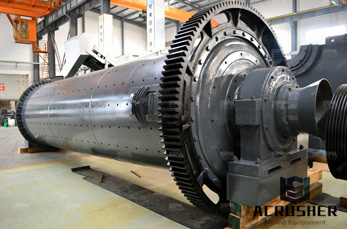
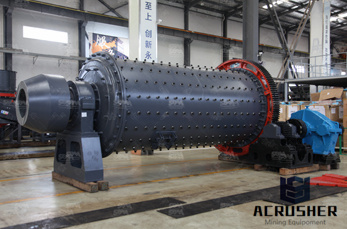
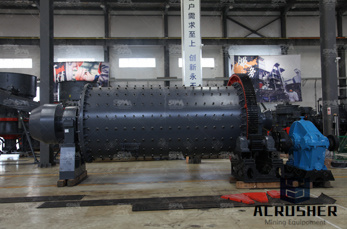
CIL gold processing plant mainly consists of following steps: 1 The ore is first reduced in size (typically 90% passing 200mesh ) to ensure that all non-refractory gold is readily accessible for cyanide leaching, There are several variations of comminution circuits used in the gold leaching industry, such as: Multi-stage crushing, then ball milling circuits, typical of ball mill and hyrocyclones.
Gold leaching process (CIL) is an efficient design of extracting and recovering gold from its ore. By chemical cyanide and carbon leaching the gold ore slurry simultaneously, CIL process lower the gold mining operation cost, and increase gold recovery rate to a ratio of >95%.
Oct 20, 2014· Leaching gold with a cyanide solution remains the most widely used hydrometallurgical process for the extraction of gold from ores and concentrates. Despite the difficulties and hazards of working with cyanide, no other process has yet been proven to be an economic viable alternative.
Leaching, often gold, is the process of extracting a soluble constituent from a solid by means of a solvent. In extractive metallurgy, of gold, it is the process of dissolving a certain mineral (or minerals) from an ore or a concentrate, or dissolving certain constituents from materials such as a calcines, mattes, scrap alloys, anodic slimes, etc., to achieve either one or two purposes ...
A phenomenological dynamic model of gold ore leaching process in agitated tanks is derived and calibrated with a set of industrial data. This model is used to simulate the dynamic behavior of a ...
Hengcheng offers complete project solutions for Alluvial Gold Processing Plant. We are one of the leading project suppliers for Alluvial Gold Wash Plant Equipment and we work closely with our customers to fulfill their specific needs for customized package solution.
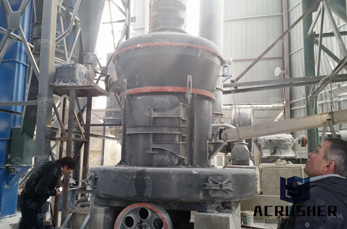
Heap Leaching is a process that used to treat the gold mine with low grade, cause it's processed simple, easy operation, low energy consumption, investment saving, effective . Scale can be chosen, the maximum scale can be million tons /day. Technology process Heap leaching process composes of concrete of the site, pre-process of the ore (crush or produce), concrete heap, spray leaching ...
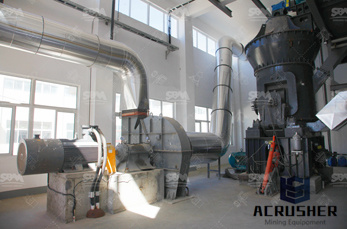
from the dissociation of the complex is used to leach gold from the ore. The stepwise dissociation of cyanide from copper-cyanide complexes can also be used to leach gold from a variety of oxide and sulphide ores. The copper cyanide's fourth ligand readily dissociates at low cyanide concentrations for use in gold leaching.
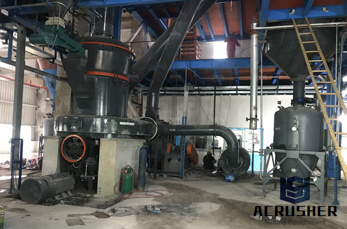
A high gold extraction (over 95 per cent) is achieved on cyanide leaching of the oxidised residue. Mintek has developed and refined the process fundamentals of the Bacox™ technology, and procedures for testing the amenability of refractory gold ores to bioleaching are well established.
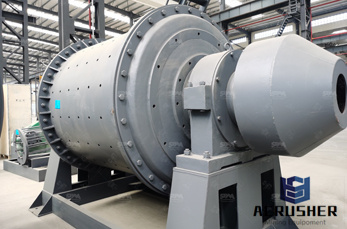
Apr 19, 2016· All the links of the 5t/d Mobile Gold CIL Plant for Gold Ore Processing are undertaken by Xinhai plant operation with decades of experience, which ensures the reliability, and security.

However, more complex or novel processes will require progressive stages of testwork, from laboratory to continuous pilot plants, to prove up and optimise the process ahead of plant design. Grind size is usually the key process parameter in a leach plant, as grinding represents the highest energy input and cost element in the overall process.

Alibaba offers 945 gold leaching plant products. About 44% of these are other mining machines, 30% are mineral separator, and 11% are leaching tank. A wide variety of gold leaching plant options are available to you, such as flotation separator, gravity separator, and sprial separator.
lurgical gold extraction routes utilize a leaching step to produce a gold-bearing solution as an intermediate product while the recycling of secondary gold from electronic and precious metal scrap is based on the selective and fast dissolu-tion of the precious metal. Therefore, A Method for Leaching or Dissolving Gold from Ores or Precious
Assuming that a gold ore has been effectively ground to ensure maximum economic liberation of gold, the circuits that will have the most effect on the successful operation of a gold plant will be that of the leaching and carbon-in-pulp circuit (CIP). The reagent and utilities operating costs associated with leaching, adsorption, elution and ...
Gold ore . Prominer maintains a team of senior gold processing engineers with expertise and global experience. These gold professionals are specifically in gold processing through various beneficiation technologies, for gold ore of different characteristics, such as flotation, cyanide leaching, gravity separation, etc., to achieve the processing plant of optimal and cost-efficient process designs.
Gold Cyanide Solution (Leaching Gold With Cyanide) Since the 1890's, cyanide has been used to recover gold from gold bearing ores. And today, over 115 years later, most of the worlds gold is recovered with cyanide playing a large part in the beneficiation of the yellow precious metal.
available for the extraction of gold metal from its ores. Amongst these methods, cyanidation is the most common method used in the leaching of gold from the ore. This process involves the dissolution of gold containing ores in dilute cyanide solution in the presence of lime and oxygen. For refractory ores such as
Sunshine Mine process plant at Kellogg, Idaho (1980), but copper concentrate leaching was advanced to larger scales with the commissioning of the Bagdad, Arizona, concentrate leach plant (2003) and then the Morenci, Arizona, concentrate leach plant (2006). Copper concentrate leaching has been driven by two principal opportunities:
Heap leaching (HL) is a flexible and economic mineral processing method, commonly used to extract gold from low-grade gold ores. In this process, ore is firstly crushed to fine particles. By spraying leaching solution to the large piles, the gold-containing solution is leached.
Gold recovery increase in CIL circuit. Various trials have shown the potential of PIONERA BioPolymer to increase metal recovery in leaching circuits. This is especially relevant in the CIL/CIP circuits used in gold processing. The benefit of PIONERA BioPolymer is also observed in the Merrill Crowe process.
WhatsApp)
 Online Chat
 Sales Hotline