
why is limestone essential in cement manufacturer Grasping strong production capability, advanced research strength and excellent service, Shanghai why is limestone essential in cement supplier create the value and bring values to all of customers.
 WhatsApp)
Cement, one of the most important building materials, is a binding agent that sets and hardens to adhere to building units such as stones, bricks, tiles, etc. Cement generally refers to a very fine powdery substance chiefly made up of limestone (calcium), sand or clay (silicon), bauxite (aluminum) and iron ore, and may include shells, chalk, marl, shale, clay, blast furnace slag, slate.
Limestone is no more considered an inert material. World wide studies have shown that limestone takes part in hydration reaction and early strength development in cement. On the addition of limestone powder to cement, a reaction between CaCO 3 of limestone and aluminate phase of cement (C 3 A) takes place, which is quite similar to gypsum-C 3 A ...
While limestone is formed by the sedimentaion of finer grains of calcarious materials. As limestone is composed of finer grains so its density is more as compared to that of sandstone, and so pores in the sandstone are more Limestone, like marble and other calcareous stones, .
Limestone is a sedimentary rock composed mainly of calcium carbonate (CaCO3). However, it can also contain magnesium carbonate, clay, iron carbonate, feldspar, pyrite and quartz in minor quantities, according to the Encyclopaedia Britannica. Most types of limestone have a .
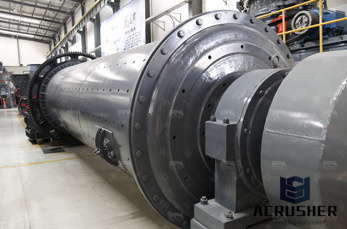
Jan 17, 2019· Cement – which is the "glue" that binds concrete together – is a fine powder made up of crushed minerals such as limestone and clay that function as a binder. Cement can be made from a variety of materials, but it can't be used on its own. In fact, Roman cement was crushed rock with burnt lime, volcanic ash, and brick supplements.
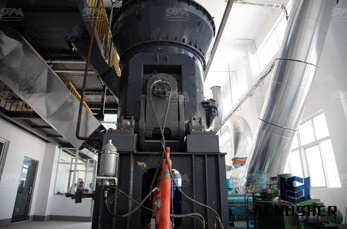
Crushed Limestone Uses. You'd be amazed at the number of ways that crushed limestone can be used for either functional or decorative purposes, including: Making Concrete – Concrete is a combination of cement, water, sand and crushed aggregate. In some cases, contractors will choose to utilize crushed limestone as the aggregate material in ...
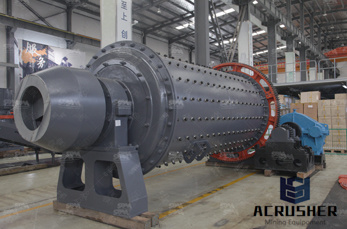
The total of aggregates produced in 2008 by weight was 69% limestone and dolomite, 15% granite, 7% traprock and 9% miscellaneous stones consisted of sandstone and quartzite, marble, volcanic cinder and scoria, slate, shell, and calcareous marl as shown in Fig. 1.By 2020, US production of crushed limestone is expected to increase by more than 20%, about 1.6 billion metric tons, while production ...
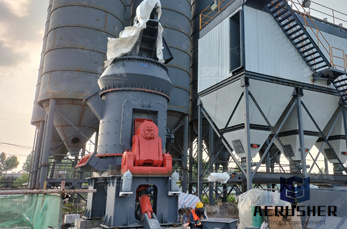
Composition of cement. Introduction Portland cement gets its strength from chemical reactions between the cement and water. The process is known as hydration. This is a complex process that is best understood by first understanding the chemical composition of cement. ... Gypsum, CaSO 4.2H 2 0: found together with limestone; The materials ...
Limestone rock is a sedimentary rock which forms in the process of sedimentation at the bottom of lakes and oceans, or in caves. It is mainly composed of mineral calcite and aragonite, both of which are crystal forms of calcium carbonate. A limestone with 95 percent or more of calcium carbonate by weight is known as a high-calcium limestone.
Nov 09, 2015· Limestone today serves one key role which cannot go unmentioned. Limestone is the raw material in manufacture of cement. Cement is key in construction industry as it is used in various construction mixtures, to meet specific needs such as manufacture of composite concrete block, in holding building blocks in place over and above finishing such as flooring.
Natural cement was produced by burning a mixture of limestone and clay together in kilns similar to those used for lime. The resulting product was ground and stored in waterproof containers. Typically, natural cements had higher clay contents than hydraulic .
Jan 29, 2014· Cements makes up between 10% to 15% of concrete's total mass; though of course the exact proportions may vary from one mixture to the next, depending on the type of concrete is being made. To make Portland cement—the most common type of cement—powdered limestone .
Concrete
After the clinker is cooled, cement plants grind it and mix it with small amounts of gypsum and limestone. Cement is so fine that 1 pound of cement contains 150 billion grains. The cement is now ready for transport to ready-mix concrete companies to be used in a variety of construction projects.
Nov 09, 2015· Limestone today serves one key role which cannot go unmentioned. Limestone is the raw material in manufacture of cement. Cement is key in construction industry as it is used in various construction mixtures, to meet specific needs such as manufacture of composite concrete block, in holding building blocks in place over and above finishing such as flooring.
Concrete is a hardened material that forms when a mixture of cement, sand, crushed stone and water is poured into moulds or formwork and allowed to cure or harden. Cement is made by strongly heating a mixture of limestone, silica and clay in a kiln until small pea-sized lumps called 'clinker' form.
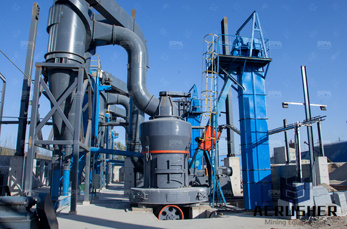
Contractors use limestone as a building material, but it's also finely crushed and added to make Portland cement. On its own, limestone's natural beauty often adorns the floors of bathrooms, kitchens and other areas of the home. As decorative floor tiles, limestone offers a .
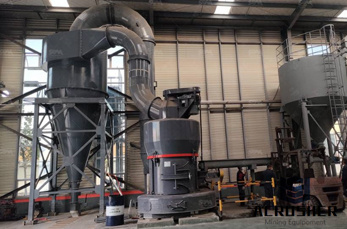
To make Portland cement—the most common type of cement—powdered limestone is heated in a rotary kiln. As a source of calcium, it joins with powdered clay to produce a product called clinker, which is then ground with a source of sulfate, like gypsum. It is mixed with water, sand and crushed rock to create concrete.

Aug 12, 2014· When OPCs with up to 5% limestone are replaced with PLCs containing 10% to 15% limestone, the resulting impact per million tons of cement produced equates to 443,000 to 664,000 million BTU less clinkering energy used and 189,000 to 283,000 tons reduction of CO2 emissions.
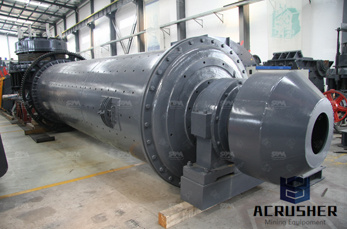
Concrete is the most used material in the world because of its cheap price and large quantity. It is needless to say concrete is made of cement. However, cement is also a criticized material by the public, for its intensive CO 2 emission from production process. The production of cement accounts for about 5-8% of the non-natural CO 2 worldwide.
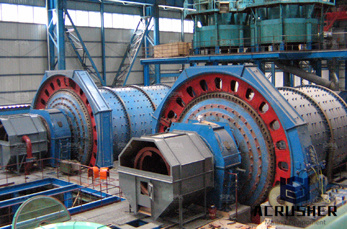
why is limestone essential in cement - belair-antwerpen. Portland cement is the most common type of cement in general use around the world as a basic ingredient of concrete mortar stucco and non-specialty grout was developed from other types of hydraulic lime in England in the late 19th century by Joseph Aspdin and usually originates from limestone is a fine powder produced by heating ...
The use of limestone in the construction industry has been increasing due to benefits as aggregate. Some of these benefits include good strength, low possibility of alkali-silica reaction and the decrease in drying shrinkage in concrete. This research discusses the consumption and general characteristics of the limestone aggregate in USA and Japan.
Jun 12, 2018· Cement is the glue that makes concrete strong, but the process of making cement requires superheating calcium carbonate, or limestone, .
Mar 26, 2015· The limestone acts as a seed crystal for the cement, better distributing the reaction products and increasing the reactivity of the cement. As there is always unhydrated cement in the concrete, this change will have no real measurable effect on the use of fly ash. The cement might have a reduced water demand, and the coarser cement gradation ...
WhatsApp)
 Online Chat
 Sales Hotline